Cost of Living in Dordogne: Complete Honest Guide for British Expats
The first time a British passenger asked me to stop at a village bar, he ordered a glass of red wine. When the bill came — €3 — he picked it up, stared at it, and looked at me. “Is this right?” he asked. It was right. It’s always right. That small moment captures something important about the cost of living in Dordogne. Not that everything is cheap — it isn’t, and anyone who tells you otherwise hasn’t bought a house here recently. But certain things cost so much less than in the UK that it takes time to stop being surprised.
Cost of Living in Dordogne at a Glance
| Category | Monthly Estimate (couple) | Verdict |
|---|---|---|
| Property (mortgage/rent) | €500 – €900 | ✅ Cheaper than UK |
| Food and drink | €600 – €920 | ✅ Significantly cheaper |
| Utilities | €200 – €365 | 🟡 Similar to UK |
| Healthcare (mutuelle) | €160 – €260 | ✅ Cheaper than UK |
| Transport | €200 – €300 | 🟡 Similar to UK |
| Leisure and misc. | €200 – €400 | ✅ Cheaper than UK |
| Total | €1,860 – €3,145 | ✅ Favourable vs UK |
Best suited for: Retired couples, remote workers, early retirees on UK pension income
Minimum comfortable income: €2,500/month for a couple
Biggest saving vs UK: Food, wine, eating out, healthcare
Hidden costs to watch: Notaire fees, renovation costs, rural transport
What the Data Actually Shows
Independent cost-of-living comparisons consistently place the Périgueux area 30–40% below London for everyday expenses. According to Numbeo’s cost of living index, consumer prices in Périgueux are substantially lower than in any major British city — particularly for groceries, restaurants, and local services.
French national statistics published by INSEE, France’s official statistics institute, confirm that the Nouvelle-Aquitaine region — which includes the Dordogne — consistently ranks among the most affordable areas of France for property and daily living costs. The gap with Paris is significant. The gap with London is larger still.
Property — The Market Has Shifted
For years, the Dordogne property market moved in one direction. British and Dutch buyers arrived, fell in love with the region, and paid prices that kept rising. Then came 2023. Inflation, rising interest rates, and economic uncertainty cooled the market — and in some areas, prices have come down meaningfully.
For anyone looking to buy now, this is good news. The competition of the post-COVID years has eased. Vendors are negotiating. Properties that would have sold in days are sitting on the market for months. Prices vary significantly by area — the Périgord Noir around Sarlat remains the most expensive, while the north of the département and areas bordering the Lot are considerably more affordable.
| Property Type | Price Range |
|---|---|
| Village house needing renovation | €60,000 – €120,000 |
| Renovated village house | €150,000 – €250,000 |
| Stone farmhouse with land | €180,000 – €350,000 |
| Larger property with pool | €300,000 – €600,000+ |
Notaire fees add approximately 7–8% to the purchase price — factor this in from the start. Read our full guide on buying property in the Dordogne for everything you need to know before signing anything.
Food and Drink — Where the Savings Are Real
This is where the cost of living in Dordogne genuinely surprises people — and where the gap with the UK is most visible. A glass of local wine in a village bar costs €2.50 to €4. A good bottle from a Bergerac producer costs €5–€8 at the cellar door. A baguette from the boulangerie costs around €1.20. British passengers notice this immediately — the casual quality of everyday food and drink at prices that don’t make you flinch.
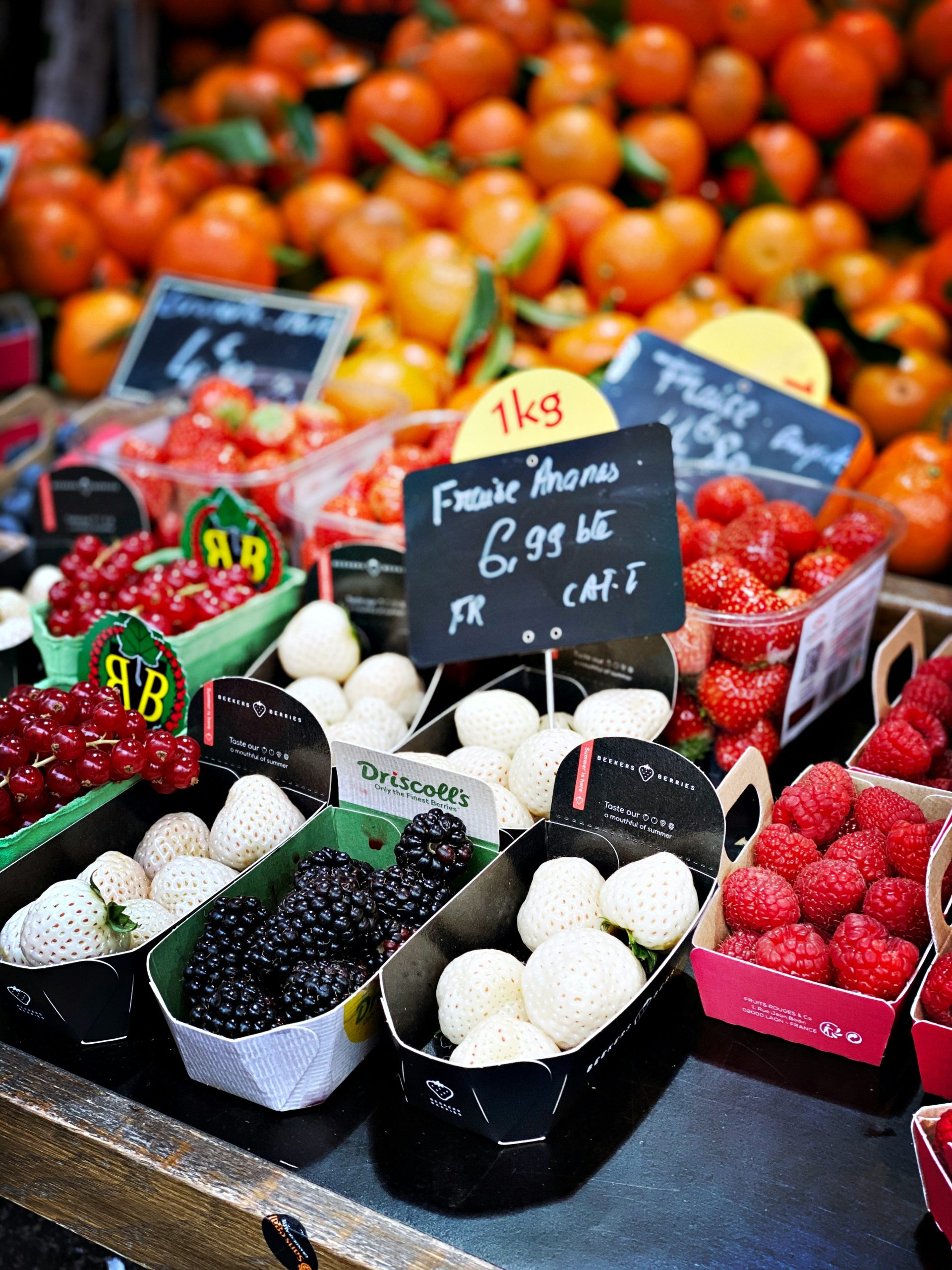
A three-course lunch — the formule du midi — in a local restaurant typically costs €13–€18, wine sometimes included. The same meal in London would cost three times as much. Shopping at the weekly market is cheaper than the supermarket for fruit, vegetables, and local produce. The quality is incomparably better — seasonal, local, grown by people you can talk to.
| Item | Monthly Estimate (couple) |
|---|---|
| Supermarket shopping | €300 – €450 |
| Market produce | €80 – €120 |
| Eating out (occasional) | €150 – €250 |
| Wine and drinks | €60 – €100 |
| Total | €590 – €920 |
Utilities and Running Costs
French utility costs are generally lower than in the UK, though they rose with European energy prices after 2022. Many rural properties use oil-fired central heating — factor in a significant annual fuel cost, particularly for larger stone houses that are expensive to heat in winter.
| Utility | Monthly Estimate |
|---|---|
| Electricity | €80 – €150 |
| Gas / heating oil | €60 – €120 (seasonal) |
| Water | €30 – €50 |
| Internet and phone | €30 – €45 |
| Total | €200 – €365 |
Healthcare Costs
Once registered with the French system, healthcare costs are genuinely low. A GP consultation costs around €25–€30, with approximately 70% reimbursed by the state. A good mutuelle — private top-up insurance — covers most of the rest. Monthly mutuelle costs for someone aged 60–65 typically run €80–€130 per person. Read our full guide on healthcare in France for British expats for the complete registration process and what to expect.
Transport Costs
A car is essential in rural Dordogne — public transport outside the main towns is very limited. Running costs are broadly similar to those in the UK, though fuel is slightly cheaper in France. Many expats find they drive more than expected when they arrive — the distances between villages are real. Factor in annual servicing, insurance, and fuel when calculating your budget.
If you’re planning a visit before committing to a move, renting a car from Bergerac airport is the most practical option. Compare car hire prices at Bergerac Airport — rates are often cheaper than you’d expect outside the peak summer season.
The Complete Monthly Budget
For a retired couple living comfortably, the cost of living in Dordogne breaks down like this
| Category | Monthly Cost |
|---|---|
| Mortgage or rent | €500 – €900 |
| Food and drink | €600 – €920 |
| Utilities | €200 – €370 |
| Healthcare (mutuelle) | €160 – €260 |
| Transport | €200 – €300 |
| Leisure and miscellaneous | €200 – €400 |
| Total | €1,860 – €3,150 |
A UK pension — state plus private — of around £2,000–£2,500 per month goes significantly further here than in most parts of Britain. That’s the basic arithmetic that drives the decision for many people who make the move.
⚠️ What Has Changed Since 2022
Food prices have risen across France, as everywhere. Energy costs spiked significantly in 2022–23 before partially recovering. Renovation materials and labour costs have increased substantially — anyone planning a project should budget more generously than they would have three years ago.
Property has moved in the opposite direction — more affordable than the peak years, with more room to negotiate. The overall picture remains favourable compared to the UK, but the gap has narrowed. Anyone planning a move should use current figures rather than guides written before 2022.
Cost of Living in Dordogne — Frequently Asked Questions
Is living in the Dordogne cheaper than in the UK?
For most retired couples, yes — particularly on food, wine, eating out, and healthcare. The savings in daily life are real and consistent. Property depends on what you’re selling in the UK and what you’re buying here.
Has inflation changed the numbers significantly?
Yes, particularly food and energy since 2022. The Dordogne remains good value compared to the UK, but less dramatically so than five years ago. The figures in this guide reflect 2026 prices, not pre-inflation estimates.
Are property prices still falling?
The market has softened since 2023. Whether prices continue to fall depends on broader European economic conditions. The current moment is generally considered a better time to buy than 2021–22 — vendors are negotiating, and properties are taking longer to sell.
What is the minimum income to live comfortably?
For a couple, a combined income of around €2,500 per month covers a modest but comfortable life. €3,500 per month allows for more flexibility, occasional travel, and home improvements without financial stress.
Do I need a car to live in the Dordogne?
Yes — in virtually all rural areas. Public transport between villages is minimal. Most expats who arrive thinking they might manage without a car quickly change their minds. Budget for purchase, insurance, fuel, and annual servicing from day one.
The Bottom Line
The cost of living in Dordogne is not as low as it was ten years ago — nothing is. But the fundamentals remain. A glass of good wine still costs €3. The bread is still baked every morning. And the gap between what life costs here and what it costs in a British city is still significant enough to change the arithmetic of retirement. The cost of living in Dordogne continues to make this one of the most compelling destinations in Europe for British expats looking for quality of life at a realistic price.
For everything you need to plan your move, read our guides on buying property in the Dordogne and healthcare in France for British expats. For a complete overview of life in the region, visit our Dordogne Travel Guide.
Disclaimer: All figures are estimates based on local experience and available data for 2026. Costs vary depending on lifestyle, location, and individual circumstances. Always seek independent financial advice before making relocation decisions.