Driving in the Dordogne: The Essential Rules for British Expats
I spend more hours behind the wheel in this department than almost anyone, and I still watch newly arrived British drivers make the same handful of mistakes every single month. Driving in the Dordogne isn’t difficult, but it runs on habits that don’t exist back home, and getting them wrong costs more than pride — fines here aren’t shy.
Here’s what actually catches people out, from the paperwork before you even start the car to the etiquette on a single-track village lane.
Driving in the Dordogne at a Glance
| Aspect | What to Know |
|---|---|
| Side of the road | Right-hand side |
| UK licence validity | Usable initially, exchange required for residents |
| Priority rule | Priorité à droite still applies on some rural junctions |
| Speed limit (village) | 50 km/h unless signed otherwise |
| Alcohol limit | 0.5g/L, stricter than the UK |
| Rural roads | Often single-track with passing points |
[Emplacement vidéo YouTube — à insérer ici en mode visuel WordPress, juste après ce tableau]
Licence Exchange: What Residents Actually Need to Do
A UK driving licence works fine for visits and the early months of residency, but once you’re officially resident, exchanging it for a French one becomes necessary over time. The process runs through the ANTS platform, France’s official licence and identity service, and involves uploading scanned documents rather than an in-person visit for most straightforward cases.
Processing can take weeks rather than days, so starting the exchange soon after settling in avoids any gap in valid cover.
Rural Roads: The Habits Nobody Warns You About
Priorité à droite — priority from the right — still applies on some unmarked rural junctions outside villages, a rule that trips up even experienced drivers used to clearer UK-style priority signage. When in doubt, slow down and check rather than assume you have right of way.
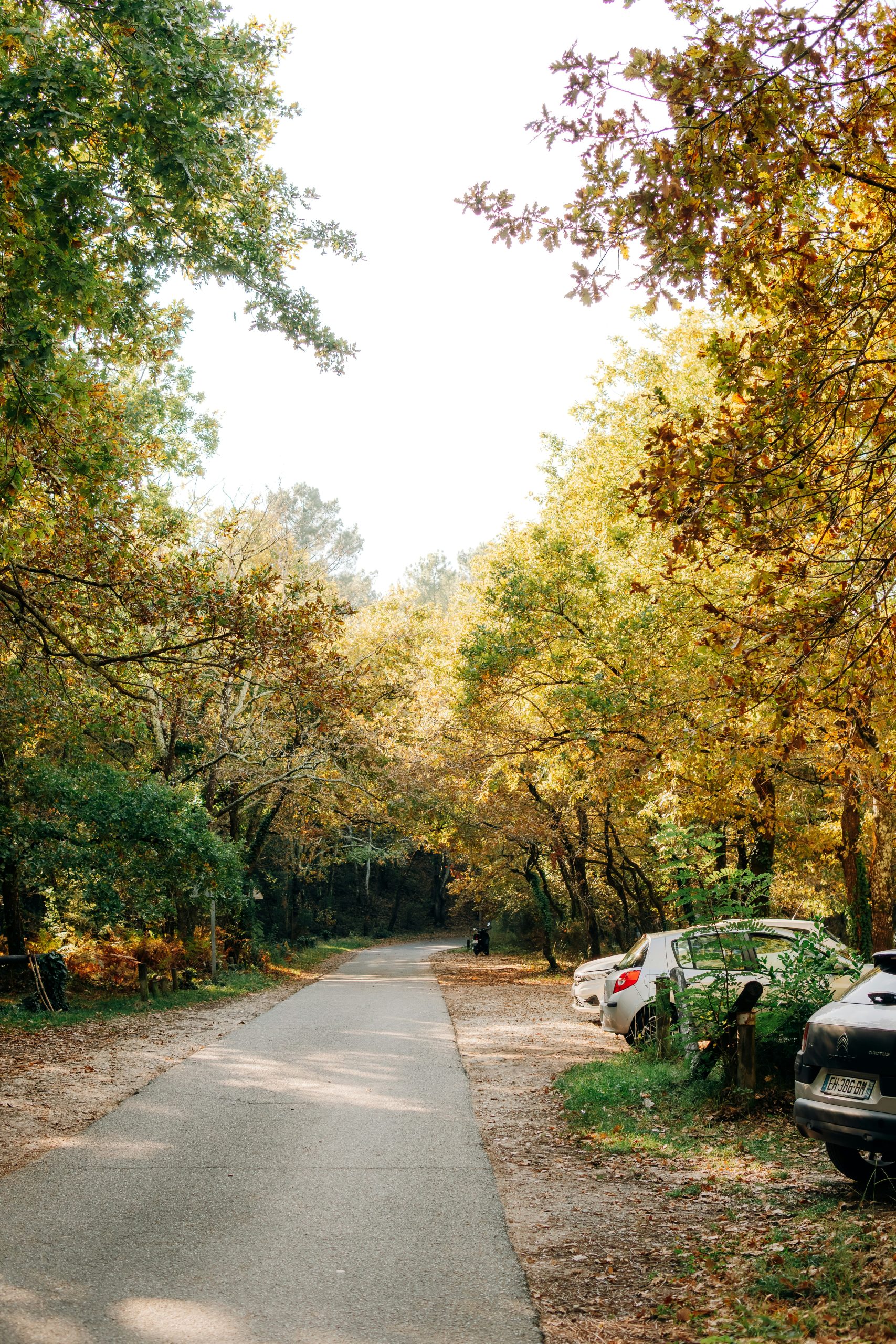
Many roads between villages in the Périgord are single-track with passing points cut into the verge. The etiquette is simple but unfamiliar to newcomers: whoever reaches a passing point first waits there, letting the oncoming car through, and a quick wave is the standard courtesy on both sides.
Village centres like Sarlat and Domme are largely pedestrianised in season, so plan on parking outside and walking in rather than trying to drive through — our weekend break itinerary notes where the practical car parks sit for the main tourist villages.
Parking and Fines
Most Dordogne town centres use pay-and-display parking during the day, checked reasonably actively in high season. Fines for expired tickets are modest but genuinely enforced, and rental cars can pick up penalty notices weeks after the fact, billed to the card on file.
If you’re driving a hire car for a visit rather than owning locally, comparing car hire options at Bergerac Airport before you land is worth doing, since availability tightens considerably in peak season.
⚠️ Practical Tips
Carry your documents in the car at all times — licence, registration (carte grise), and insurance certificate; French police checks do happen, particularly around holiday weekends. Fill up before heading into rural areas — village petrol stations are scarce and some close on Sundays. Budget extra time for narrow roads in summer when tourist traffic adds to the usual rural pace. And don’t assume a French breathalyser law works like the UK’s — carrying one is no longer legally required, but the lower alcohol limit very much still is.
Driving in the Dordogne — Frequently Asked Questions
Can I drive in the Dordogne on a UK licence?
Yes initially, but once officially resident, exchanging it for a French licence via the ANTS platform becomes necessary over time.
What’s the speed limit in Dordogne villages?
50 km/h unless otherwise signed, with many village centres restricted further or pedestrianised entirely during peak season.
Is priorité à droite still a thing?
Yes, on some unmarked rural junctions. It’s less common than it used to be nationally, but the Dordogne’s rural road network still has genuine examples worth watching for.
Do I need a car to live in the Dordogne?
Essentially yes outside the main towns. Public transport is limited, and daily life in rural Périgord assumes a car for almost everything.
The Bottom Line
Driving in the Dordogne comes down to a handful of habits that don’t exist back in the UK — priority from the right, single-track etiquette, and a licence exchange that’s easy to put off but shouldn’t be. Get those right early, and driving in the Dordogne becomes exactly what it should be: the easiest and most enjoyable part of living here.
For the wider move, our pieces on the cost of living in the Dordogne and renting in the Dordogne cover what comes next. For the broader picture, start with our Dordogne travel and expat hub.