La Roque-Gageac, Dordogne: Essential Guide to the Most Dramatic Village
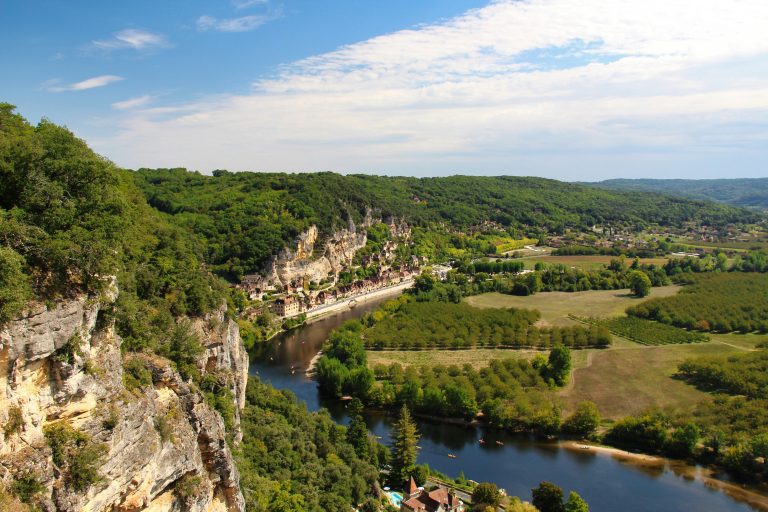
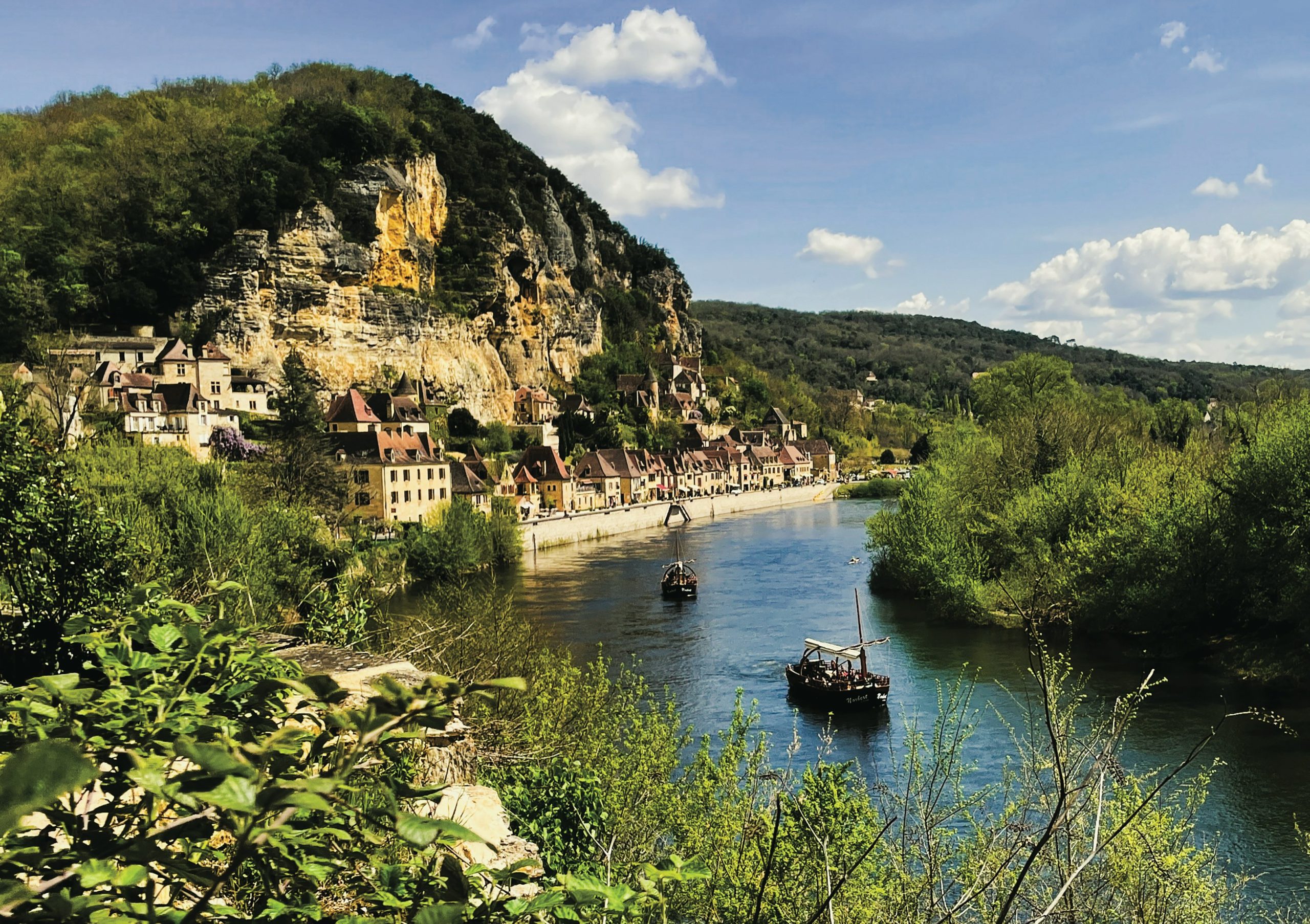
La Roque-Gageac, Dordogne, is one of the most photographed villages in France — and one of the most underestimated. Carved into a golden cliff above the river, it looks like something from a painting. But there is more to it than a pretty face. For eight centuries, this was a working river port, one of the busiest in southwest France. Today, it remains one of the best places to spend a slow afternoon in the Périgord — and one of the strongest arguments for making the Dordogne your home.
La Roque-Gageac Dordogne — at a Glance
| Detail | Information |
|---|---|
| Location | 11 km west of Sarlat-la-Canéda |
| Gabarre trips | April–October, from ~€12/adult |
| Fort Troglodyte | Open daily in season, ~€6 entry |
| Parking | Pay car park at village entrance |
| Best time to visit | Weekday mornings in May, June, or September |
| Nearest towns | Sarlat (15 min), Beynac (5 min) |
| Label | Les Plus Beaux Villages de France |
A Village Built Around the River
Most visitors stop, take a photo, and move on. That is a shame. La Roque-Gageac has one of the best backstories in the Dordogne. From the 13th century onwards, it became a major river port. Flat-bottomed boats called gabarres carried wine, salt, and timber downstream to Bordeaux and beyond. At its peak, the village had dozens of boatmen — bateliers — whose families had worked the river for generations.
The river was not just a backdrop. It was the reason the village existed. The cliffs behind offered protection. The Dordogne offered trade. And the mild microclimate — warmed by the south-facing rock — means exotic plants like bamboo and palm trees still grow here today. A kind of Périgord tropics, unlike anywhere else in the region.
What Happened to the Boatmen?
The gabarres stopped running commercially in the 19th century when the railway arrived and made river trade uneconomical. The boatmen’s way of life slowly disappeared. But the tradition did not die completely. Today, replica gabarres leave from La Roque-Gageac on guided river trips. You sit on wooden benches, drift past walnut orchards and limestone cliffs, and hear stories about the old trade routes. The trip takes about an hour and costs around €12 per adult — one of the most relaxing things you can do in the Dordogne on a warm afternoon.
Book a guided gabarre river trip from La Roque-Gageac
What to See and Do in La Roque-Gageac, Dordogne
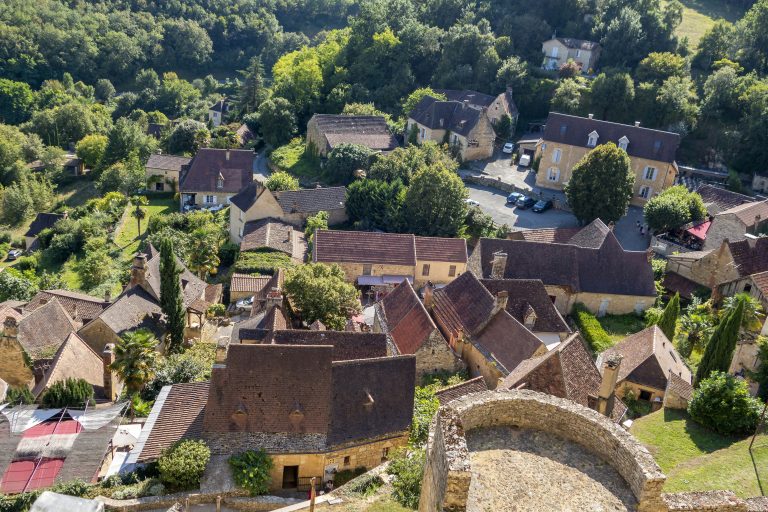
Walk the single street. La Roque-Gageac has essentially one main lane running along the river. It is narrow, quiet, and lined with golden stone houses. No cars. No rush. Just the sound of the water and the cliffs rising behind you.
Visit the Fort Troglodyte. Cut into the cliff above the village, the medieval fort offers views over the river valley that are genuinely extraordinary. You can visit independently with an audio guide. Allow about 45 minutes. According to the Les Plus Beaux Villages de France association, La Roque-Gageac is one of the officially designated most beautiful villages in the country — the fort is a large part of why.
Take a gabarre trip. The boats leave from the village quay from April to October. Several companies operate the service — no booking usually needed, just show up at the quay.
Eat by the river. There are a handful of restaurants along the waterfront. Nothing fancy, but the setting makes everything taste better. Local duck, local wine, and the Dordogne sliding past your table.
Combine with Beynac and Domme. All three villages are within ten minutes of each other by car. A full day covers all three comfortably. Compare car hire prices at Bergerac Airport — the most practical way to explore this part of the valley.
Why Expats Love This Area
Many British and Dutch expats who discover La Roque-Gageac Dordogne on a first visit end up settling within easy reach of the river valley between Sarlat and Bergerac. La Roque-Gageac sits right in the heart of it. If you are looking at properties near Sarlat, Beynac, or Saint-Cyprien, this village will be practically on your doorstep. On a weekday morning in October, you can have the whole place almost to yourself. It is also a useful benchmark when house-hunting — if you can drive to La Roque-Gageac in under 30 minutes, you are in the right part of the Dordogne.
⚠️ Practical Tips Before You Visit
La Roque-Gageac, Dordogne, is at its busiest in July and August— arrive before 9 am or visit in May, June, or September for a quieter experience. Parking fills quickly in summer — use the pay car park at the village entrance and walk in. The gabarre trips run from April to October only — check current schedules before planning your visit around them. The Fort Troglodyte requires some climbing — comfortable shoes are recommended. A car is essential for combining La Roque-Gageac with nearby villages like Beynac and Domme.
La Roque-Gageac Dordogne — Frequently Asked Questions
Is La Roque-Gageac worth visiting?
Yes — without question. It regularly appears on official lists of the most beautiful villages in France. The combination of cliff, river, and medieval architecture is unlike anywhere else in the Dordogne. Even a short visit leaves a strong impression.
How long do you need in La Roque-Gageac?
Two to three hours is enough to walk the village, visit the fort, and take a gabarre trip. Combine it with Beynac and Domme for a full and satisfying day in the valley.
Can you live near La Roque-Gageac?
Yes. The surrounding villages — Vézac, Saint-Vincent-de-Cosse, Beynac — have properties at various price points. It is a popular area for expats precisely because of the scenery and proximity to Sarlat. Read our guide on buying property in the Dordogne for the full picture.
Are the gabarre trips suitable for older visitors?
Generally yes. The boats are flat-bottomed and stable. You will need to step aboard from the quay, but the trip itself is very gentle and suitable for most ages and mobility levels.
Is the village busy in summer?
July and August are busy — this is one of the most visited villages in the Dordogne. Early mornings are much quieter, even in peak season. May, June, and September offer the best balance of good weather and manageable crowds.
The Bottom Line
La Roque-Gagea, in the Dordogne, is not just a photo opportunity. It is a place with eight centuries of stories — river trade, cliff forts, boatmen, and slow afternoons on the water. If you are making a new life in the Dordogne, La Roque-Gageac is exactly the kind of place you will want ten minutes from your front door.
For more on the region, read our guides on things to do in the Dordogne and the cost of living. For a complete overview, visit our Dordogne Travel Guide.
Disclaimer: Opening times, prices, and schedules change regularly. Always verify directly with local operators before visiting. This guide reflects information available in 2026.