Dordogne Food: What the Périgord Actually Eats
This Dordogne food guide starts with a simple moment. An American passenger in the back of my taxi is biting into a tomato from a market stall and stopping. “Your fruit actually tastes of something,” he said. He was not being poetic — he was genuinely surprised. The Dordogne food guide that follows is built on that same surprise: the discovery that ordinary things here — bread, wine, duck, fruit — are completely different from what most people are used to. This is what eating well in the Périgord actually looks like.
Dordogne Food Guide — at a Glance
| Food or Drink | What to Know | Where to Find It |
|---|---|---|
| Duck (magret, confit) | The region’s signature meat | Every restaurant and market |
| Foie gras | Périgord produces the finest in France | Farms near Sarlat, markets |
| Truffles | Black truffle season November–March | Markets, specialist producers |
| Walnut oil | Pressed locally, unlike anything imported | Markets, farm shops |
| Monbazillac wine | Rivals Sauternes at a fraction of the price | Cellar door, markets |
| Fresh bread | Baked daily, €1.20 a baguette | Every village boulangerie |
| Seasonal fruit | Strawberries in May, tomatoes in August | Weekly markets |
The Markets — Where the Dordogne Food Guide Begins
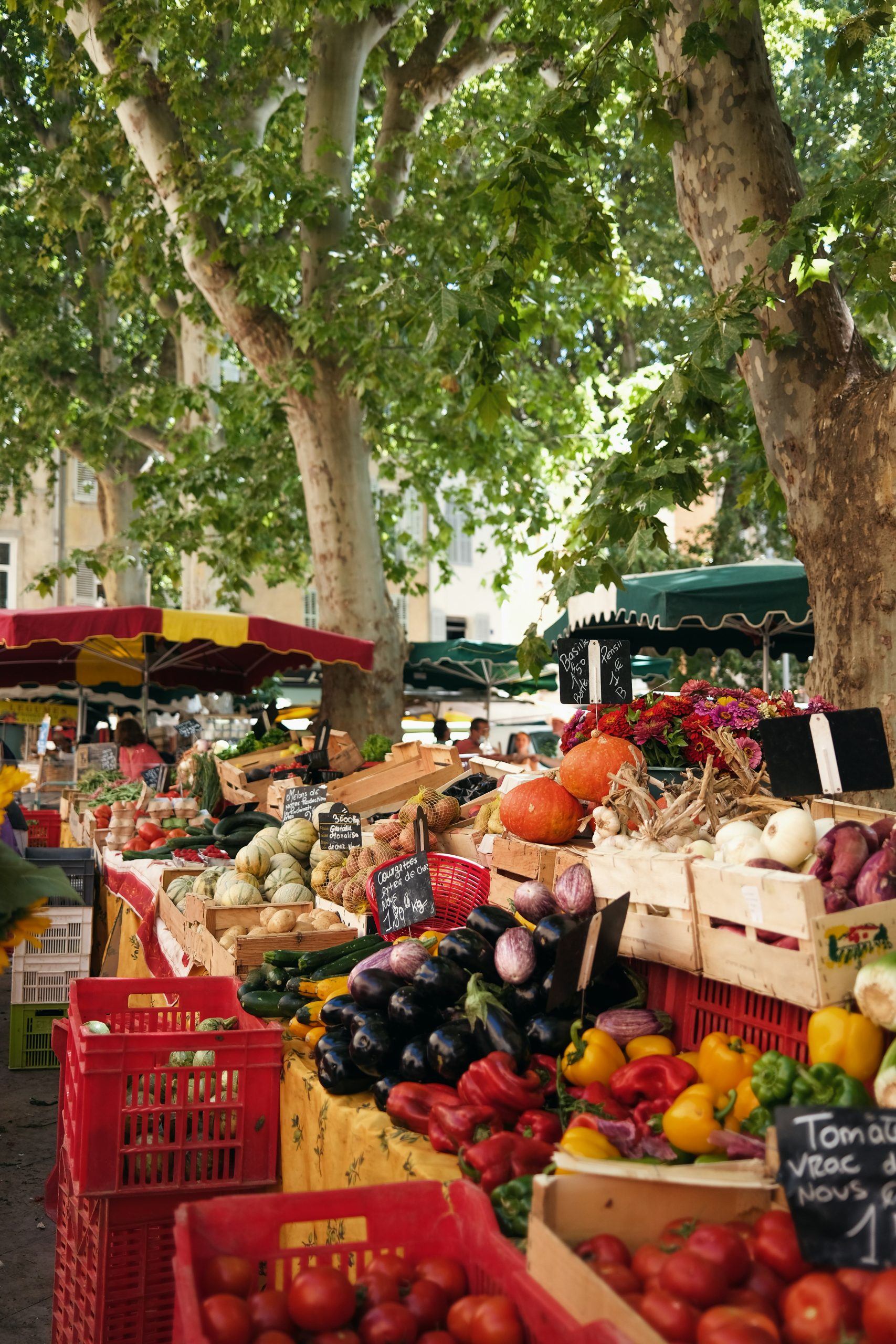
Any Dordogne food guide worth reading starts at the market. Seasonal vegetables harvested two days ago. Walnut oil is pressed locally. Foie gras is sold by the family that made it. Cheese from farms twenty minutes away. The prices are fair. The quality is extraordinary. Go to a real market — Wednesday or Saturday in Périgueux, Bergerac, or Sarlat — before anything else. According to Dordogne Périgord Tourisme, the region has over 80 weekly markets operating across the département.
| Market | Day | Known For |
|---|---|---|
| Périgueux | Wednesday & Saturday | Largest, most varied |
| Sarlat | Saturday | Most atmospheric |
| Bergerac | Wednesday & Saturday | Wine producers present |
| Eymet | Thursday | Heart of expat community |
| Le Bugue | Tuesday & Saturday | Less touristy, authentic |
Duck — The Star of the Périgord Table
Duck is to the Périgord what beef is to Argentina. Magret de canard — duck breast, served pink — appears on every menu. Confit de canard — duck leg slow-cooked in its own fat — is the more traditional preparation. A confit de canard with pommes sarladaises — potatoes cooked in duck fat with garlic — costs around €15–€18 in a local restaurant. In London, the same dish, done half as well, costs twice as much. No Dordogne food guide is complete without it.
Foie Gras — The Périgord’s Most Famous Product
Foie gras divides people before they try it. After they try it, opinions tend to shift. The Périgord produces some of the finest in France. A starter of foie gras on toasted brioche with a glass of chilled Monbazillac is one of those combinations that makes you understand why people move here. Several farms near Sarlat and Périgueux offer visits and tastings — ask through local expat groups for current recommendations.
Truffles, Walnuts and the Périgord Pantry
The black truffle — tuber melanosporum — is one of the most prized ingredients in French cooking, and the Périgord is one of its natural homes. The season runs from November to March. Truffle markets in Périgueux and Sarlat draw buyers from across Europe. Walnut oil, pressed locally from the Périgord’s abundant walnut trees, is another product that surprises first-time visitors — nothing like the imported versions sold in UK supermarkets. Walnut cake, tarte aux noix, and walnuts sold fresh from the shell in October round out a pantry that has barely changed in centuries.
The Bread
The French boulangerie is not a cliché. It is a daily institution. Most villages have one. The bread is made that morning. A baguette tradition costs around €1.20. A croissant au beurre costs less than a pound. British expats say the same thing in their first months: they cannot believe something so ordinary can be this good. The bread they ate before starts to seem like a different product entirely.
Wine and Drinks — The Dordogne Food Guide Beyond the Plate
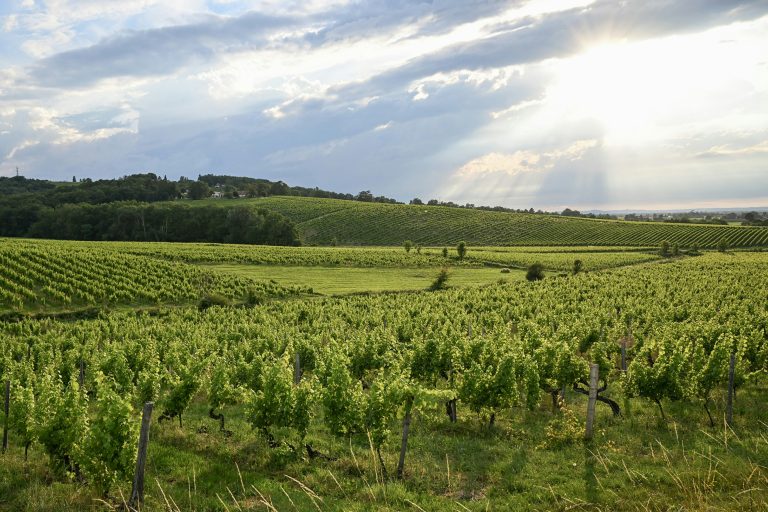
No Dordogne food guide would be complete without the wine. The Bergerac wine region — just 90 km east of Bordeaux — produces excellent reds and whites at prices that make Bordeaux look expensive. A good bottle from a local producer costs €5–€8. Monbazillac, the region’s famous sweet white wine, starts at around €6 bought directly from the producer and rivals Sauternes at a fraction of the price. In a village bar in the Périgord, a glass of local wine costs €2.50–€4. That small detail explains a lot about why people stop leaving. Read our full Bergerac wine region guide for everything you need to know.
Beyond wine: Floc de Gascogne — an aperitif made from Armagnac and grape juice, Eau de noix — local walnut liqueur distinctly Périgourdin, and a growing craft beer scene worth exploring across the region.
The Seasons — A Different Relationship With Food
Food genuinely changes with the seasons here — and you feel it. Strawberries in May. Tomatoes in August. Truffles from November to March. Walnuts in autumn. Game through winter. The rhythm of what is available at the market tells you exactly what time of year it is. For people who have spent years buying the same plastic-wrapped tomatoes in January and July, this reconnection with seasons is one of the quiet pleasures of moving to the Dordogne.
Eating Out — What It Actually Costs
Southwest France is not expensive for eating well. A three-course lunch — formule du midi — in a local restaurant typically costs €13–€18. Evening meals cost more but remain significantly cheaper than equivalent quality in the UK. Locals mostly eat at home, the market, the boulangerie, local butcher. Restaurants are for occasions. A useful thing to know is if you are watching your budget in the first months after the move.
⚠️ Practical Tips for Food Lovers
Arrive at markets before 10 am — the best produce goes fast, and the atmosphere before the crowds arrive is something special. Most boulangeries close on Mondays — plan your bread buying accordingly. Truffle markets run on specific dates from December to February — check the Périgueux tourist office website for current schedules. Many farms selling foie gras and walnut products require a short drive on D-roads — a car is essential for the full Dordogne food experience. Compare car hire prices at Bergerac Airport — the most practical base for exploring the region’s food producers.
Dordogne Food Guide — Frequently Asked Questions
Is the food really that much better in France?
The ingredients are genuinely different — particularly fruit, vegetables, and bread. Most people who move here notice within weeks. The difference is not subtle. It is the kind of thing that makes you reassess everything you thought you knew about food.
Is eating out expensive in the Dordogne?
No. A three-course lunch typically costs €13–€18. Evening meals cost more but are still significantly cheaper than equivalent quality in the UK. The formule du midi is one of the best-value meals in Europe.
When is truffle season in the Dordogne?
The black truffle season runs from November to March, with peak availability in January and February. The Périgueux truffle market is one of the most important in France and is worth planning a visit around if you are in the region during winter.
Where can I buy local wine directly from producers?
At cellar doors across the Bergerac wine region, most producers welcome visitors without appointments outside July and August. The Wednesday market in Bergerac and the Saturday market in Sarlat also have wine stalls with producers selling directly.
Can I find international food in the Dordogne?
Yes — particularly in Périgueux and Bergerac. But most people who move here find they stop wanting it fairly quickly. When the local food is this good, the incentive to look elsewhere largely disappears.
The Bottom Line
This Dordogne food guide ends where it began — with the simple fact that ordinary things here taste extraordinary. After a few months of market shopping, local wine, and bread baked that morning, most expats find it genuinely hard to go back to how they ate before. The Dordogne food guide is not about Michelin stars or gastronomic tourism. It is about daily life in a region where the basics are genuinely excellent — and where food is still taken seriously by the people who grow it, make it, and sell it.
For more on life in the region, read our Bergerac wine region guide and our guide to things to do in the Dordogne. For a complete overview, visit our Dordogne Travel Guide.
Disclaimer: Market days, seasonal availability, and producer opening times change regularly. Always verify locally before planning a specific visit. This guide reflects information available in 2026.