Outdoor Activities in Dordogne: Essential Guide for Active Expats
The outdoor activities in Dordogne are one of the region’s best-kept secrets. People move here for the food, the property prices, and the pace of life. They stay, in part, because they discover they can be more physically active here than they ever were back home. The river is there every morning. The roads are quiet. The trails go on for miles. For active expats moving to southwest France, the outdoor activities in Dordogne offer a genuinely sporty life at a fraction of the cost of the UK, in some of the most beautiful countryside in Europe.
Outdoor Activities in Dordogne — at a Glance
| Activity | Level | Best Season |
|---|---|---|
| Canoeing | All levels — no experience needed | May, June, September |
| Cycling | Gentle to challenging | April–October |
| Walking / hiking | All levels — 3,000km of trails | Year-round |
| Rugby | Social to competitive | September–May |
| Padel | Beginner-friendly | Year-round |
| Golf | All levels | March–November |
| Skiing (Pyrenees) | All levels | January–March |
| River swimming | All levels | June–September |
Canoeing — The Classic Outdoor Activity in Dordogne
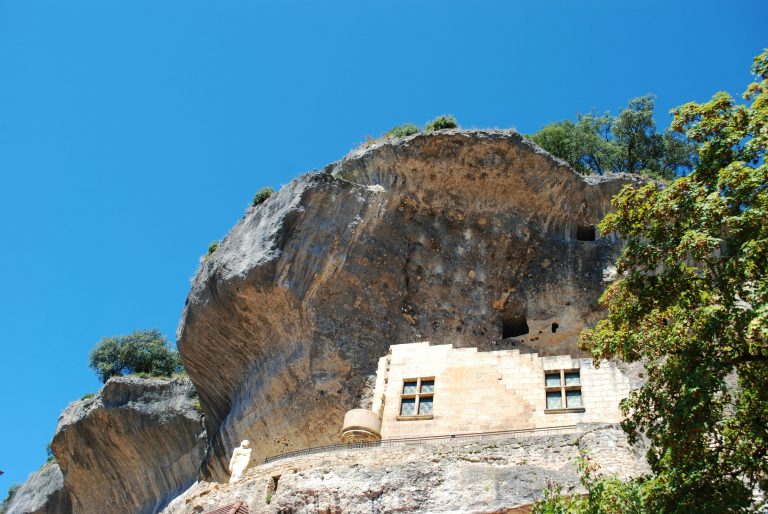
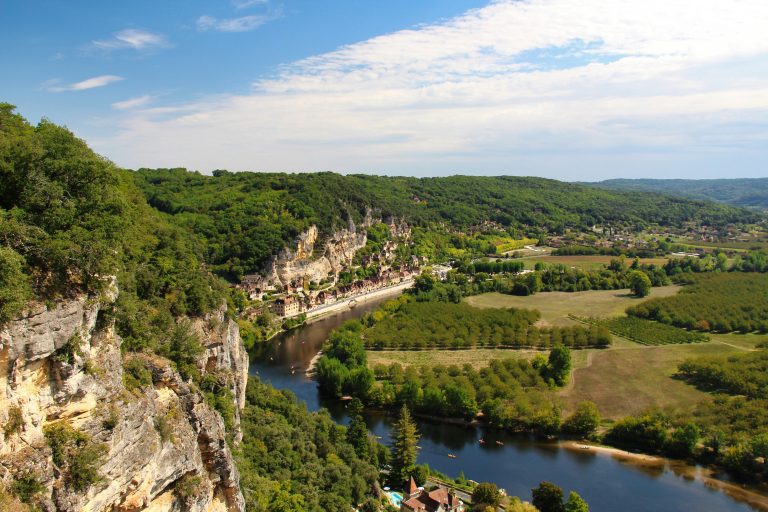
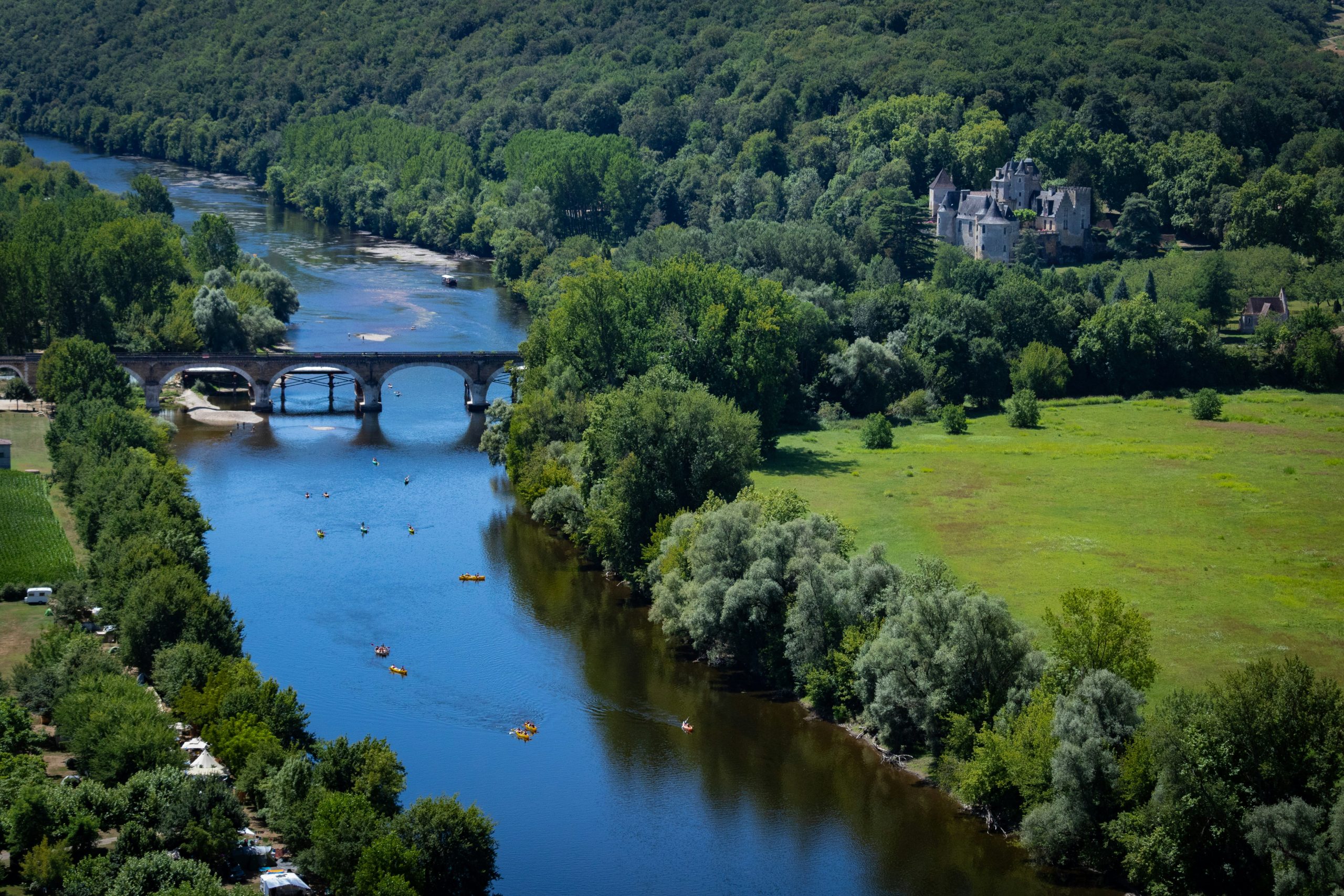
The Dordogne River and its tributaries offer some of the finest canoeing in France. The most popular stretch runs between La Roque-Gageac and Beynac — two to three hours on the water, passing directly beneath some of the region’s most dramatic châteaux. You round a bend, and there is a fortress on a cliff above you that has been there since the Hundred Years’ War. Nobody is rushing you. The river does not care about your schedule.
The smaller rivers are less visited and often more rewarding — the Vézère, the Célé, and the Lot offer quieter water and fewer tourists. Rental is available at multiple points along the main routes. No experience necessary. Families manage it comfortably.
Book a guided canoe experience on the Dordogne River
Cycling — A Region Built for Bikes
The Dordogne has the infrastructure and the landscape that serious cyclists dream about — rolling hills, quiet D-roads, medieval villages connected by routes that have not changed in decades. For road cyclists, the climbs around the Périgord Noir offer a genuine challenge without requiring Alpine fitness. For those who prefer something more relaxed, the valley floors follow rivers for miles with barely a gradient in sight. Mountain biking has grown significantly — the Périgord Vert has well-marked trails through forest that few tourists ever reach. Several expats arrive as occasional cyclists and leave, after a few years, as people who ride every morning before breakfast.
Rugby — The Local Religion
If you are British and moving to southwest France, there is something you should know about rugby here. It is not a sport. It is a way of organising community life. The club structure runs deep — from village teams playing on Saturday afternoons in front of fifty people to Union Bordeaux-Bègles, who play in front of sold-out crowds at the Stade Chaban-Delmas. For British expats from Wales, the West Country, or the North of England, this is one of the unexpected pleasures of the move. Local clubs welcome new members. Turn up, show interest, and you will be welcomed. It is one of the fastest ways into a French community.
Padel — The Sport Everyone Is Talking About
Padel has grown faster in France over the past few years than almost any other sport — and the Dordogne is no exception. New courts are opening regularly around Périgueux, Bergerac, and the larger towns. For British expats, padel is worth knowing about for a simple reason: it is one of the easiest ways to meet French people your age. The format — four players, fast games, lots of rotation — is naturally social in a way that tennis is not. You do not need to be good. You need to show up.
Walking and Hiking — Endless Options
The Dordogne has over 3,000 kilometres of marked walking trails, according to the Dordogne Périgord Tourisme office. The GR36 and GR6 long-distance paths pass through some of the most beautiful landscapes in France. The Chemin de Saint-Jacques de Compostelle — the pilgrimage route to Santiago — passes through the region every spring and summer. For expats who want to explore the countryside gradually and on foot, this is perhaps the most accessible of all the outdoor activities in Dordogne. No equipment, no planning, no cost. Just good boots and time.
Golf — Better and Cheaper Than You’d Expect
The Dordogne has several well-maintained golf courses — more than you would expect for a rural region. The Golf de Périgueux, the Golf de Lolivarie near Bergerac, and the Golf des Forges are all significantly cheaper to play than equivalent courses in the UK. For retiring expats who have always wanted more time on the course, this is worth factoring into your decision before you move.
Football — More Than Just a Game
Football is woven into the fabric of French village life in a way that offers real opportunities for integration. Most villages of any size have a local club. Turning up — whether to play or just to watch — opens doors that stay closed to people who stay at home. Nobody is expecting Ligue 1 football on a Sunday morning in a village of 800 people. What they are expecting is someone who shows up, tries, and stays for a drink afterwards.
Skiing — Closer Than You Think
The Pyrenees are roughly two and a half hours south of the Dordogne. The ski resorts — Cauterets, Font Romeu, La Mongie — are genuinely accessible for a weekend trip. Not the Alps, but for someone who wants skiing without the Alpine price tag, it works well. Several expats in the region make an annual trip in January or February and treat it as a welcome bonus.
River Swimming and Everything Else
Most villages have a tennis court — often free or very cheap. Municipal swimming pools are well-maintained and affordable. Horse riding is popular and well catered for across the rural areas. Outdoor swimming in the rivers deserves special mention — the Dordogne has designated swimming spots that are safe, clean, and genuinely beautiful. Swimming beneath a medieval château on a July afternoon is one of those experiences that makes people wonder why they did not move here sooner. The general principle holds: in the Dordogne, being active is easy and cheap.
⚠️ Practical Tips for Active Expats
A car is essential for reaching most outdoor activity points — public transport is limited outside the main towns. May, June, and September are the best months for canoeing and cycling — warm, uncrowded, and with all rental operations open. For river swimming, always use designated areas and check local signage for current conditions. Rugby and football clubs typically run registration evenings in September — the start of the French sporting season. For skiing, book Pyrenean accommodation well in advance for the February half-term, which is the busiest period. Compare car hire prices at Bergerac Airport — the most practical base for exploring the region’s outdoor activities.
Outdoor Activities in Dordogne — Frequently Asked Questions
Do I need to be fit to enjoy outdoor activities here?
No. Everything from gentle riverside walks to serious cycling climbs exists here. The outdoor activities in Dordogne genuinely cater for every level — from complete beginners to experienced athletes.
Are there English-speaking sports clubs?
Some, particularly around Eymet and Bergerac. Rugby and cycling clubs are generally welcoming to newcomers, regardless of language — sport has a way of making communication easier than it is in other social situations.
Is padel popular with expats?
Growing fast. Courts are opening regularly, and the social format makes it ideal for meeting people — both French and fellow expats. It is currently one of the most effective ways for new arrivals to build a social life quickly.
Can I ski from the Dordogne?
Yes — the Pyrenean resorts are around two and a half hours away. Not an everyday option, but very doable for a weekend trip in January or February. Several expats make it an annual tradition.
Is outdoor swimming safe in the rivers?
Yes — there are designated and monitored swimming areas along the Dordogne River and its tributaries. Always check local signage for current conditions and avoid unmarked areas after heavy rainfall.
The Bottom Line
The outdoor activities in Dordogne are one of the strongest arguments for making this region your home. The river is there every morning. The trails go on for miles. The padel courts are filling up. The rugby clubs are welcoming. Most active expats say the same thing after a year here — they move more than they ever did at home. The outdoor activities in Dordogne are not what bring most people here, but they are often what make them stay.
For more on life in the region, read our guides on things to do in the Dordogne and retiring in the Dordogne. For a complete overview, visit our Dordogne Travel Guide.
Disclaimer: Club schedules, court availability, and ski resort conditions change regularly. Always verify locally before planning activities. This guide reflects information available in 2026.