Sarlat Dordogne: Essential Heart of the Périgord Noir
I’ve driven more passengers into Sarlat Dordogne than almost anywhere else in the Périgord — dropping visitors near Place de la Liberté before a market morning, or picking up a couple after dinner who can’t stop talking about the golden stone glowing under the streetlamps. It’s the one town in this region that lives up to every photo you’ve seen of it, and then some.
| Sarlat at a Glance | |
|---|---|
| Population | ~9,000 |
| Region | Périgord Noir, Dordogne |
| Market days | Wednesday (food only) and Saturday (full market) |
| Distance from Bergerac | ~1 hour by car |
| Best for | Medieval architecture, market food culture, day-trip base for Beynac, Domme, Lascaux |
| Truffle market | December to mid-March, Wednesday and Saturday mornings |
[Insert YouTube video here — a short walking tour of Vieux Sarlat or the Saturday market, embedded via the WordPress visual editor, not pasted as a link.]
Why Sarlat Feels Different From Other Dordogne Towns
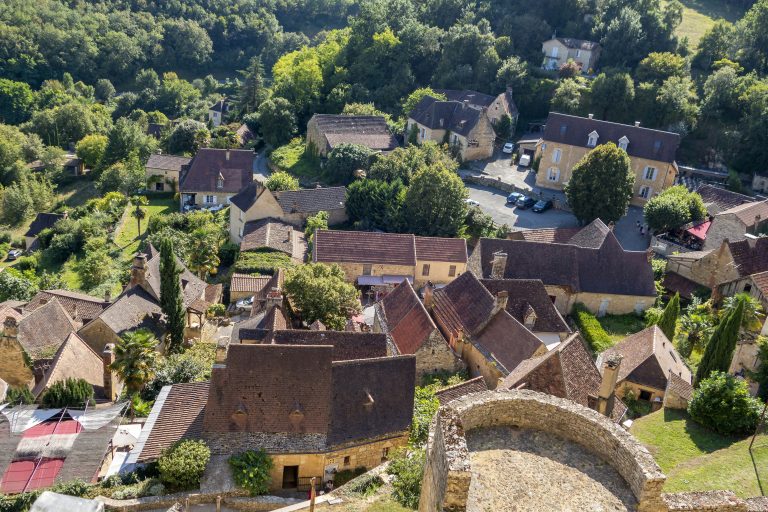
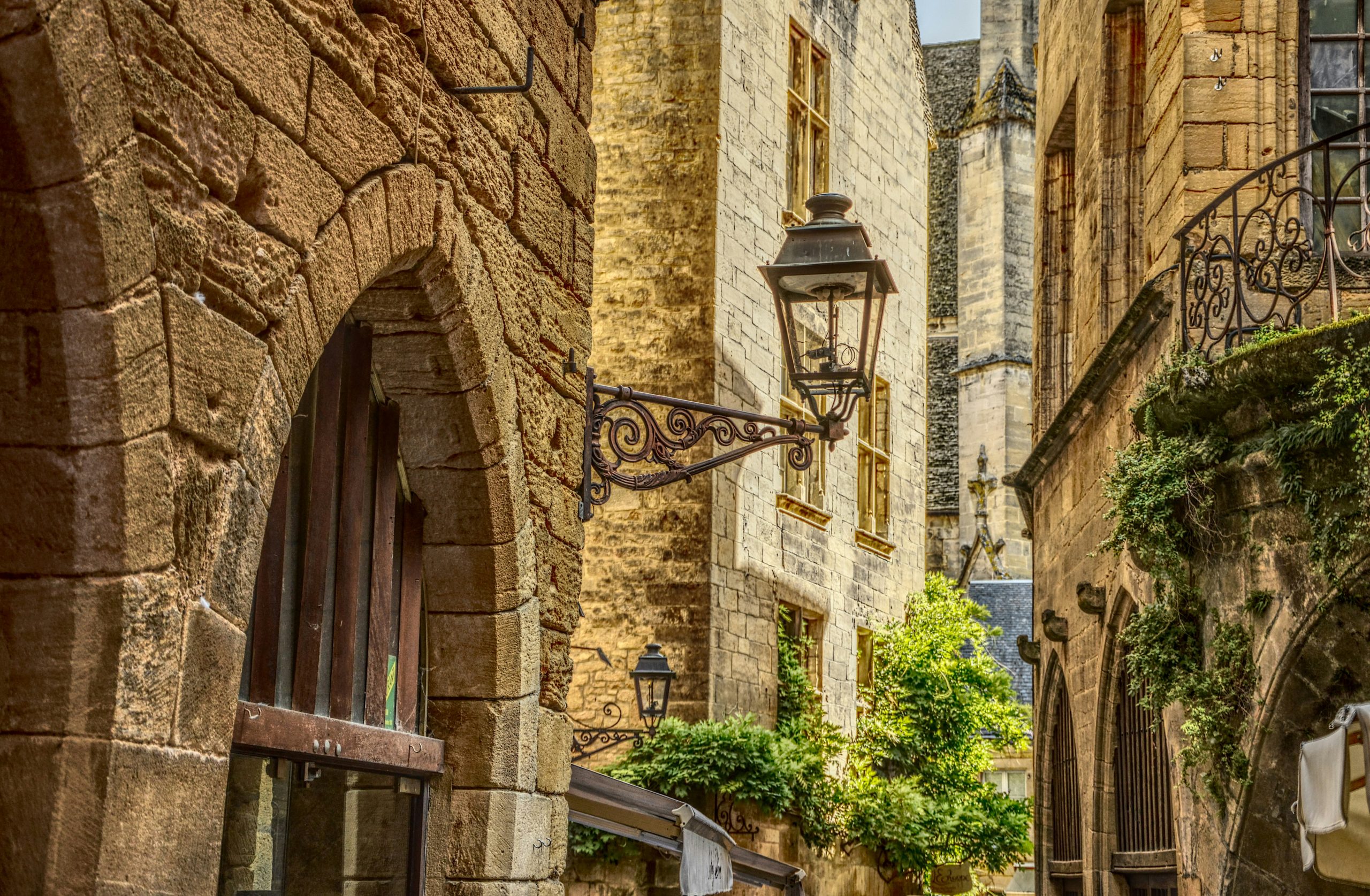
Sarlat Dordogne has the highest density of listed historic buildings anywhere in France — the town was largely bypassed by 19th and 20th-century development, which is exactly why it survived intact. Ridley Scott shot part of The Last Duel here without needing a single CGI backdrop. Walk the length of Rue de la République and you’re moving through five centuries of stone without a modern building breaking the line.
Vieux Sarlat: Where to Actually Walk
Start at Place de la Liberté, then follow Rue des Consuls past the Hôtel de Maleville. Climb toward the Cathédrale Saint-Sacerdos — Romanesque foundations, Gothic nave, free to enter — and step behind it to see the Lanterne des Morts, a strange 12th-century conical tower unique to this part of France. From there, drop down through Rue Jean-Jacques Rousseau back toward the market. It’s a two-hour loop if you don’t stop; most people take twice that, because there’s always another doorway worth a second look.
Market Days: Wednesday vs Saturday
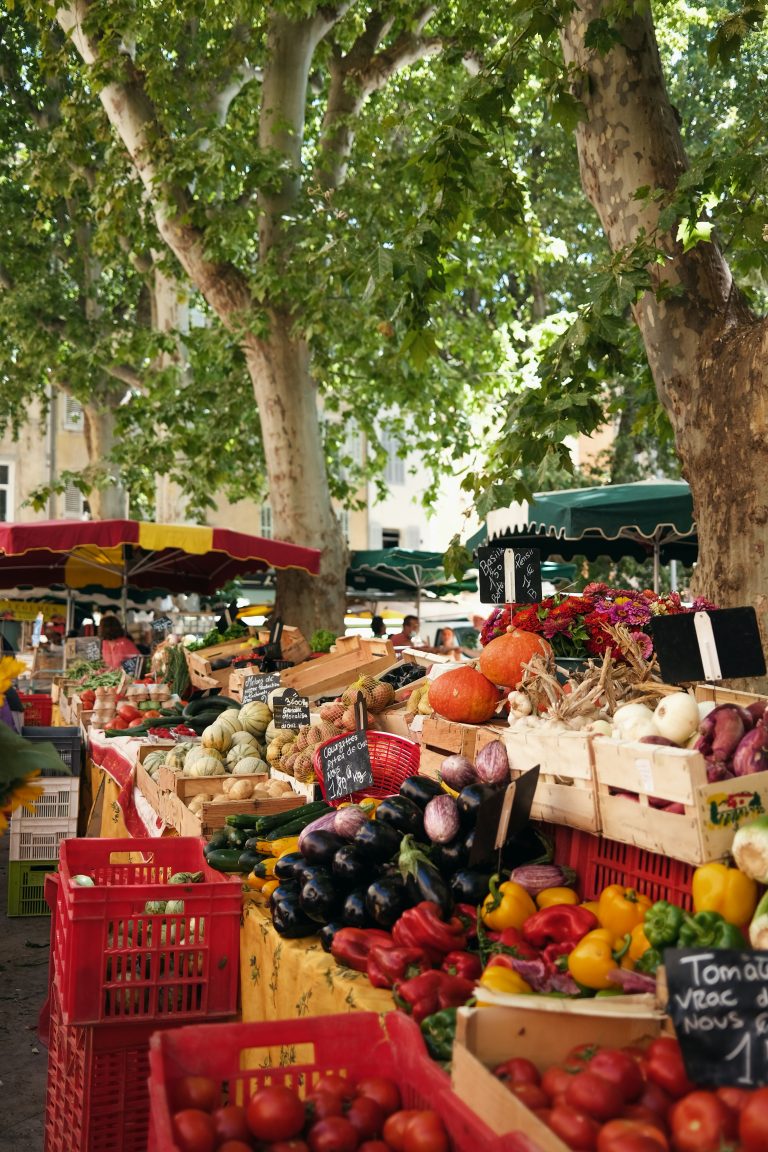
This is where I’d steer most of my passengers if they only had one morning. Wednesday is the smaller, food-focused market — walnuts, duck confit, local cheese, fewer crowds. Saturday takes over the entire old town: food in the morning, then crafts, clothing, and stalls spilling down Rue de la République into the afternoon. Between December and mid-March, both days add a dedicated truffle market on the town hall square — worth planning a trip around if truffles are the reason you’re here.
Manoir de Gisson and the Goose Market
A short walk from the main market square, Place du Marché aux Oies takes its name from the geese once traded there — a bronze statue of three geese marks the spot today. The Manoir de Gisson itself, recently opened to visitors, shows Sarlat’s noble side: original furniture, wood panelling, and a spiral staircase worth the climb for the view over the rooftops.
Practical Tips
- Arrive before 9am on a Saturday if you want to see the market before the coach tours do — parking fills fast and the old town itself is pedestrian-only
- Wear proper shoes — the cobbles are beautiful and genuinely uneven, not a stylised version of uneven
- Thursday is the one day the covered market (inside the old Église Sainte-Marie) is closed — don’t plan around it
- If you’re basing yourself in Sarlat for the day, it pairs naturally with a half-day tour to Beynac and Domme, both a short drive away
Common Mistakes
The biggest one I see: trying to “do” Sarlat in an hour between two other stops. It doesn’t reward rushing — the town is built for wandering, and the streets that look identical on a map are genuinely different when you’re walking them. The second mistake is skipping the covered market because it looks like “just a supermarket” from outside. It’s a 12th-century church converted by architect Jean Nouvel — one of the more unusual buildings in the Dordogne, and easy to miss if you don’t know to look for it.
Getting to Sarlat
If you’re staying in Bergerac or further west, renting a car is the most practical way in — public transport to Sarlat from outside the immediate area is limited. For accommodation in or near the old town, searching stays in Sarlat early is worth it in summer, when rooms in the historic centre book out weeks ahead.
FAQ
What are Sarlat’s market days?
Wednesday morning (smaller, food-focused) and Saturday (the full market, spreading through the old town). See our guide to villages in Périgord Noir for how Sarlat compares to its smaller neighbours.
Is Sarlat worth visiting outside market days?
Yes — the old town itself is the main draw, and it’s quieter and easier to photograph on non-market mornings. Check our things to do in Dordogne article for a wider day-trip plan.
How far is Sarlat from Beynac and Domme?
Both are under 15 minutes by car, making Sarlat a natural overnight base for exploring the Dordogne valley castles and villages covered in our hidden places in Dordogne guide.
Can you visit Sarlat without a car?
It’s possible if you’re staying in the old town itself, but reaching the surrounding villages and châteaux really does need a car — see our notes on getting to the Dordogne from the UK for route planning.
When is truffle season in Sarlat?
December through mid-March, with dedicated truffle markets on Wednesday and Saturday mornings on the town hall square.
The Bottom Line
Sarlat Dordogne isn’t a town you tick off a list — it’s the one place in the Périgord Noir where the medieval version of France you imagined before you arrived is exactly what you find, still functioning as a real market town rather than a museum piece. For more on planning your time here, see our full Dordogne travel guide, and pair a Sarlat visit with our guides to Périgord Noir’s smaller villages and hidden places in the Dordogne.